
Focused connection
Can one match at a time lead to better conversations?
Claspa journal · Published
Why focused attention may support more deliberate dating conversations, while leaving chemistry and effort where they belong: with the two people involved.
One-match-at-a-time dating removes competing discovery during an active connection. It may make attention easier to allocate, but it cannot make either person responsive, compatible or considerate.
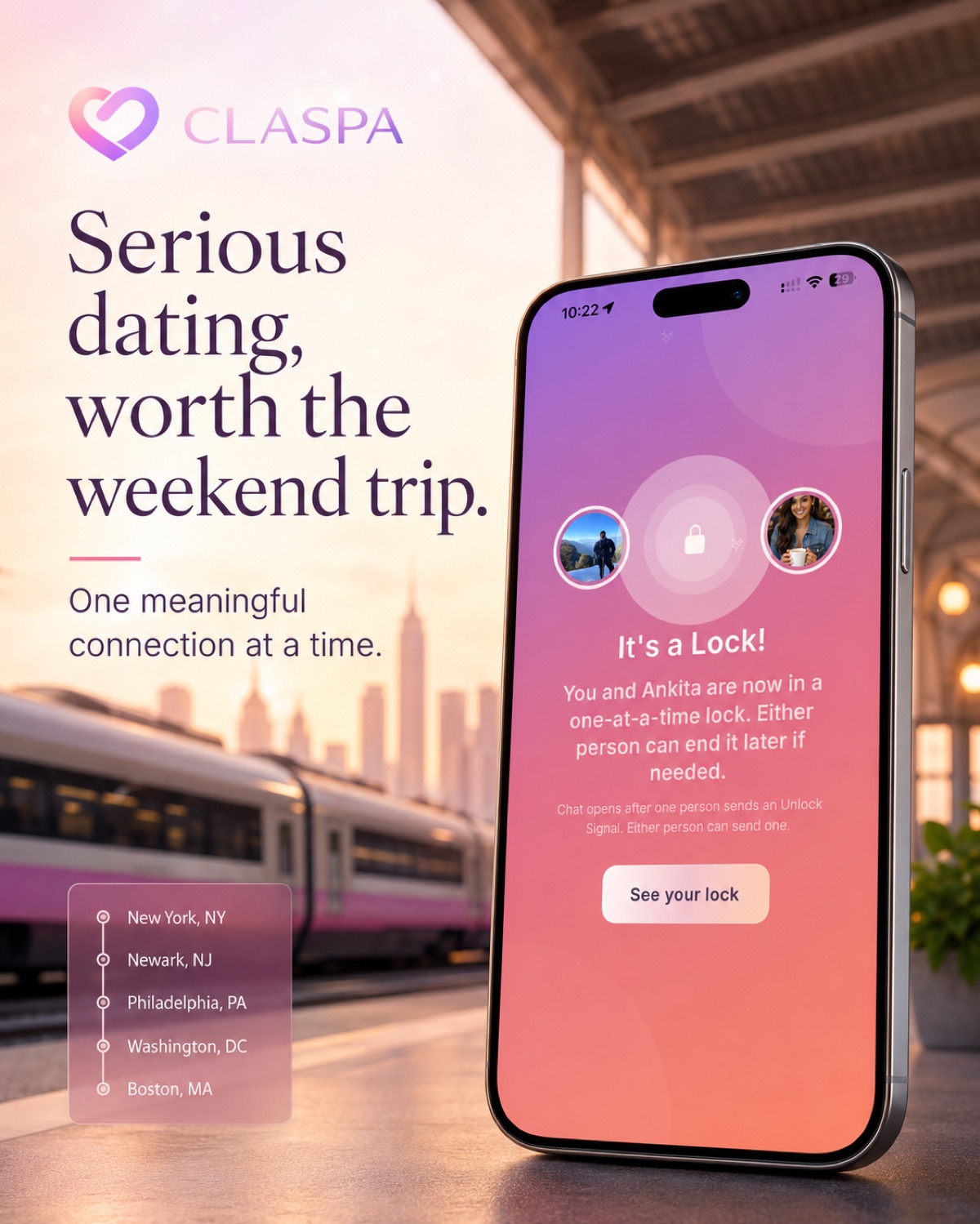
Why focus may help
Attention can move from scanning to understanding
Parallel matches divide time across profile review, openings, follow-ups and comparison. Pausing discovery removes some of that interface-level competition and creates a shared signal: this is the connection currently being evaluated.
Research on online choice suggests that large, reversible option sets can affect rejection and satisfaction. A clear stopping point may support focus, but it cannot turn an unresponsive or incompatible match into a good conversation.
What the product cannot do
Structure creates room; people create the conversation
A Lock cannot generate curiosity, empathy or compatibility. Better conversations still require specific questions, reciprocal disclosure, respect for boundaries, and a willingness to end the connection honestly when it is not working.
Either person can end a Claspa Lock. Focus should never be interpreted as ownership, forced exclusivity or an obligation to continue.
- Ask about something specific in the profile.
- Match effort instead of performing constant availability.
- Clarify relationship goals without demanding certainty.
- End the Lock when the fit is not right.
Conversation quality
A good exchange becomes progressively more specific
Strong early conversation moves beyond a sequence of interview questions. Each person responds to what was actually said, offers relevant information about themselves, and creates a thread the other can continue. Specificity is a clearer signal of attention than message length alone.
Focused product design may make that attention easier to allocate, but it cannot require reciprocal curiosity. A sparse or one-sided conversation is still useful information about the fit.
From chat to reality
Do not confuse excellent texting with established compatibility
Texting reveals communication style, not the whole relationship. Tone can be misread, carefully composed messages can hide inconsistency, and chemistry may change in person. When both people are comfortable, move toward a short video call or safe public meeting rather than building an imagined relationship in chat.
Keep the first step proportionate. A simple coffee or walk in a public place creates more useful information than an elaborate date that increases pressure before trust exists.
Ending well
Focus also makes a clear no more important
When only one connection is active, prolonged ambiguity can hold both people in place. If interest has ended, a brief direct message and ending the Lock is kinder than continuing low-effort contact—provided sending that message feels safe.
No response should be treated as permission to escalate contact through other platforms. Respect silence, boundaries and explicit rejection.
Inside the product
See Claspa in action.
Explore key product moments alongside the ideas that inspired Claspa. Preview profiles protect member privacy.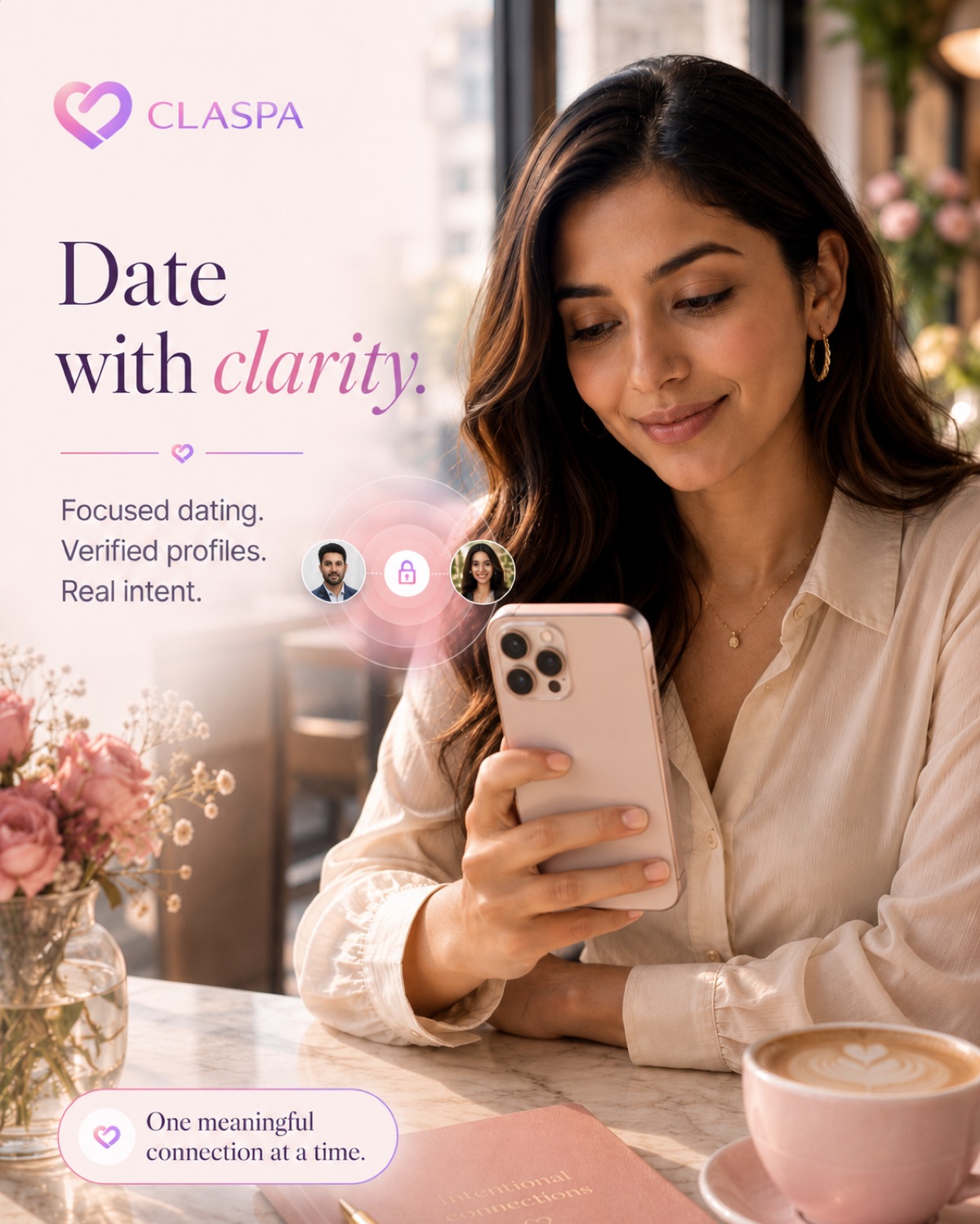
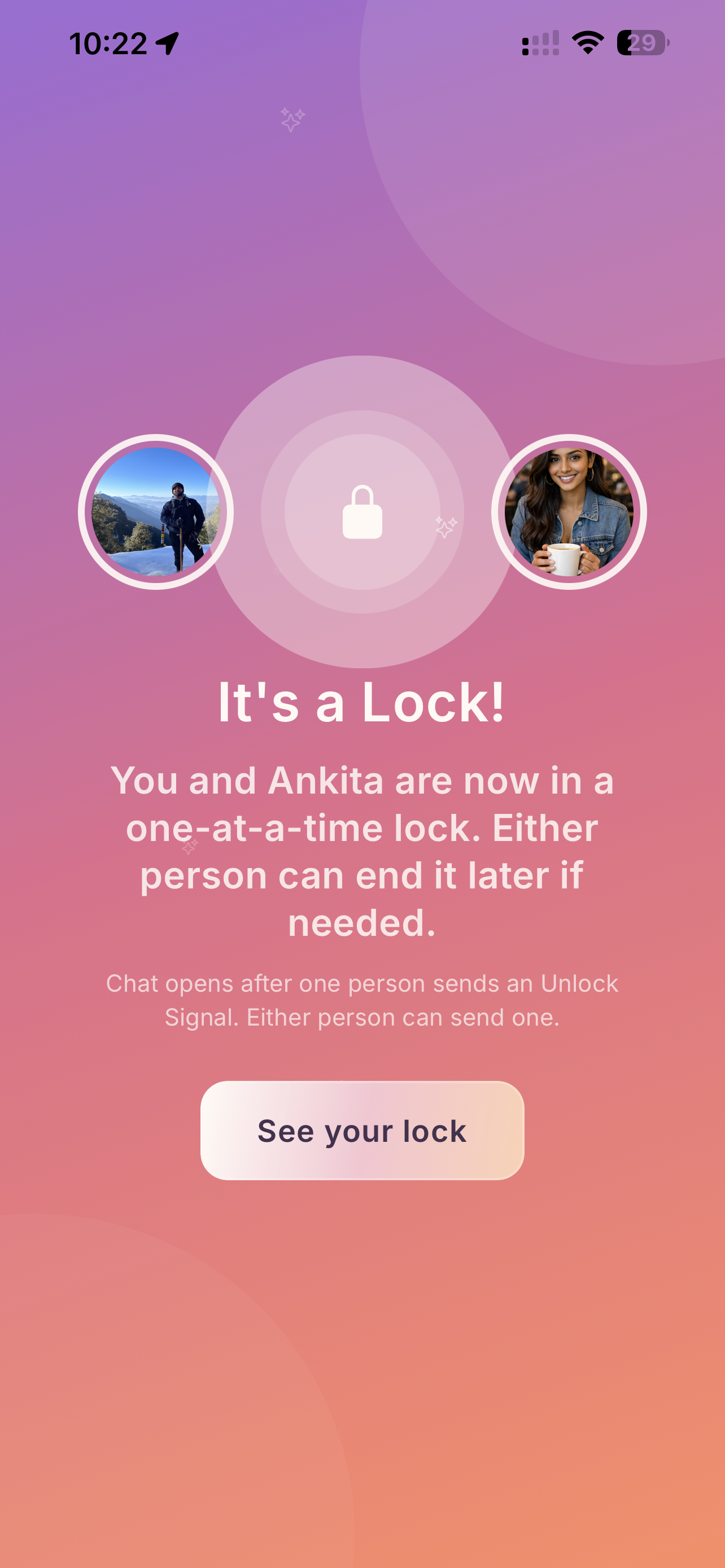 Preview profile
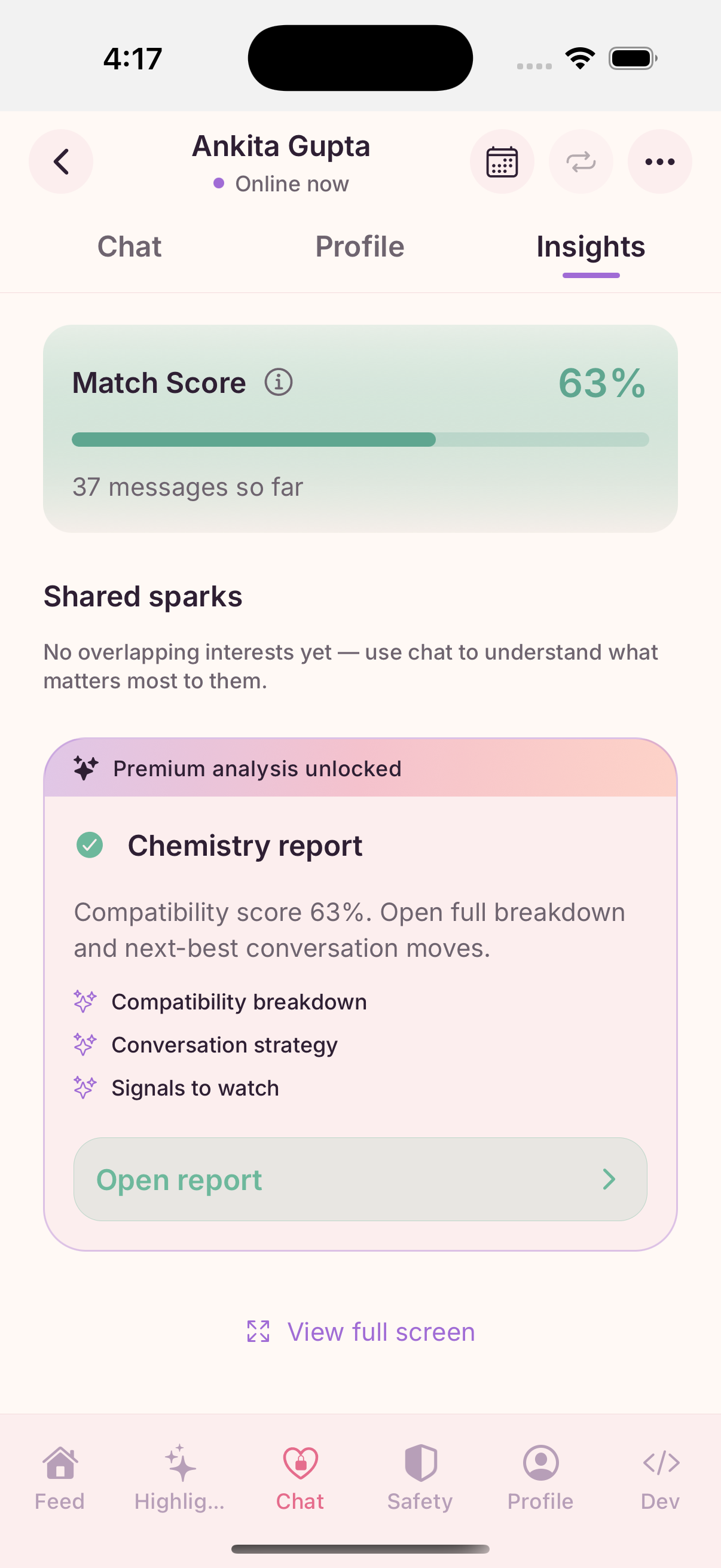 Preview profile
Go deeper
What the research says
These studies add context to the topic. They can inform better questions, but they do not predict any one person’s dating experience.- A Rejection Mind-Set: Choice Overload in Online DatingSocial Psychological and Personality Science
Supports the choice-and-rejection mechanism; it does not test Claspa's Lock.
- Plenty of Fish in the SeaMedia Psychology
Examines choice-set size, reversibility and later satisfaction.
Clear answers
Frequently asked questions
Does one match guarantee a better conversation?
No. It reduces interface-level competition but cannot guarantee effort, chemistry or responsiveness.
Is a Lock the same as exclusivity?
No. It pauses Claspa discovery. Real-world exclusivity requires a direct agreement.
Can I leave a poor match?
Yes. Either person can end the Lock and return to discovery.
What is a good first message on Claspa?
Refer to a specific profile detail, ask one answerable question, and share a small relevant detail about yourself.
When should a match move off chat?
When both people feel comfortable and basic expectations align, suggest a safe, low-pressure next step. There is no universal timeline.
One match. Full attention.